The federal regulatory status of CBD is a contradiction: it's legal to grow, legal to sell, but not legally regulated as a dietary supplement or food additive. This gap creates problems for consumers and legitimate businesses alike.
What the 2018 Farm Bill Did
The Agriculture Improvement Act of 2018 removed hemp (Cannabis sativa with less than 0.3% THC by dry weight) from the Controlled Substances Act. This made hemp cultivation, processing, and sale legal at the federal level — including the extraction and sale of hemp-derived CBD.
What the Farm Bill did NOT do: authorize CBD as a food additive or dietary supplement ingredient. That regulatory authority belongs to the FDA, which has yet to establish a framework. For state-level variation, see our state laws overview.
The FDA Gap
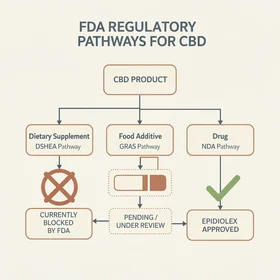
The FDA's position since 2018 has been that CBD cannot be marketed as a dietary supplement because it was first studied as a drug (Epidiolex, approved 2018). This interpretation has prevented the agency from creating supplement-specific regulations — even as the market grew to $6+ billion with thousands of products.
In practice, the FDA has taken limited enforcement action against CBD companies, primarily targeting those making disease claims. The result is de facto market access without formal regulatory approval — the worst of both worlds for quality and consumer protection.
Proposed Legislation
Several congressional proposals have aimed to resolve the CBD regulatory gap:
- CBD product safety and standardization act proposals — would require third-party testing, label accuracy standards, and manufacturing quality requirements
- Hemp-derived cannabinoid regulation proposals — would bring CBD under existing dietary supplement regulations (DSHEA framework)
- State-level CBD bills — many states have implemented their own testing and labeling requirements ahead of federal action
The trend is toward regulation, not prohibition. The question is when and how comprehensive the framework will be.
What This Means for Consumers
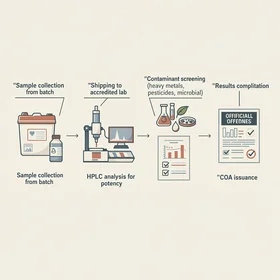
Until federal regulation catches up, the burden of quality evaluation falls on consumers. The practical defense: buy from brands that voluntarily meet the standards that regulation would require — third-party batch-specific COAs, cGMP manufacturing, accurate labeling, and transparent sourcing. Our quality and testing guide covers exactly what to look for.
Brands like Populum already operate at this standard voluntarily. When regulation eventually arrives, they won't need to change anything. For a closer look at Populum's specific product line and lab transparency, Get Populum covers their full range. For a broader look at CBD product sourcing and the science behind cannabinoids, CBD education and extraction methods covers the foundational landscape.
Best For: Who Benefits from Tracking CBD Policy?
This resource is ideal for anyone navigating the CBD regulatory landscape — whether you're selling, recommending, or buying CBD products.
- CBD brand operators — Need to anticipate labeling, testing, and marketing rules before they become mandatory. Recommended for companies building compliance programs ahead of federal action.
- Supplement retailers — Must understand which products they can legally stock and what documentation to require from suppliers
- Health practitioners — Recommending CBD requires knowing the regulatory status in your state and the quality markers that distinguish vetted products
- Consumers buying CBD regularly — Understanding policy helps you identify brands that already meet the standards regulation will require
- Legal and compliance professionals — The intersection of FDA authority, state hemp programs, and Farm Bill provisions creates a complex compliance landscape